
Searching Haskell County Criminal Dockets
Begin at Kansas CaseSearch. Pick District, select Haskell County, then apply the Criminal filter. A full case number beats a party name for precision. Kansas tickets pair a four-digit year with a format like 2024-CR-000123. A county-coded number may carry HS. When no county code appears, choose Haskell rather than guessing at a code that could send the docket search astray.
Name searches take Last Name, First Name format. The portal accepts a date of birth or a file-date range to narrow results. Finish the human check before assuming a blank screen means the case does not exist. Open the match and read Events, the closest thing online to the chronological criminal docket.
- Choose District and the narrowest search type, preferably the full case number.
- Select Haskell County and Criminal when the number does not fully identify the case.
- Complete the human check, compare the court, type, and filing date, then open the match.
- Read Events for settings, resets, pleas, orders, and disposition entries.
- Ask the Haskell clerk for a certified order or a public item that is not online.
Haskell Criminal Case Number Clues
The letters inside a case number can steer a Haskell County criminal docket search. CR signals a criminal case type, and HS can flag Haskell County in coded form. Treat these marks as aids only. The court and type shown in the result control. The four-digit year matters too. Drop a zero or shorten the year, and an exact docket lookup fails.
- HS
- The Haskell County code used in applicable Kansas case-number forms.
- CR
- The criminal case-type marker in the official example format.
- Events
- The ordered CaseSearch view of filings, hearings, orders, and outcomes.
- Disposition
- The recorded outcome, which is not the same as every later sentencing or review event.
Have only a citation? Enter the whole ticket number. If a city officer wrote it under a city ordinance, check whether Sublette or Satanta Municipal Court holds the case.
Inside a Haskell County Criminal Docket
A public Haskell County criminal docket can map a case from start to finish without showing every filed page. Read the labels with care. A charge listed at filing is an accusation, not a finding, and an event date may mark when a paper was entered rather than a hearing. The latest reset can also replace an older setting.
| Case identity | Case number, Haskell County, court, criminal type, and filing date. |
|---|---|
| Charge | Count, statute, offense label, and classification when public. |
| Participants | Party roles, prosecutor role, attorney fields, judge, or division. |
| Pretrial events | Appearance, arraignment, bond event, motions, settings, and resets. |
| Outcome events | Plea, finding, dismissal, diversion, trial result, disposition, and sentence. |
| Documents | Complaint, motion, journal entry, order, judgment, appeal, and viewer status. |
A document label on the docket does not guarantee an open image. Kansas redaction rules and the case's access status still govern what the public can view.
Haskell Criminal Dispositions in FY2025
The FY2025 criminal disposition report is the official source. It covers county-level context through the period ending June 30, 2025. It counts 30 felony dispositions and 20 misdemeanor dispositions for Haskell County. Those are cases resolved during the report period. They are not pending counts, live portal results, or tallies of unique people.
The felony row breaks into 6 dismissals, 20 guilty pleas, and 4 other dispositions. On the misdemeanor side: 7 deferred adjudication or diversion outcomes, 7 dismissals, 5 guilty pleas, and 1 other. Each label means something distinct. One disposition total tells you nothing about a different case.
How a Haskell Criminal Case Moves
A criminal docket grows one event at a time. The order varies. Events can trace a case from filing through settings to a recorded result. Motions, resets, amended charges, or diversions can each add branches. A filing alone proves neither that the charge stayed the same nor that judgment followed.
Docket flow: Filing › Arraignment › Pretrial › Plea or Trial › Disposition › Sentencing
Later docket entries often cover costs, probation review, restitution, post-judgment motions, or appeal. For a current hearing, trust the newest valid setting and confirm with the clerk if entries conflict.
Missing Haskell Criminal Documents
A case shell with no image is not proof a filing vanished. The paper may predate online access, sit only on a courthouse terminal, or be restricted. Check the county, type, full number, and date range. Then jot down the exact event title and filing date.
If the record should be public, call the Clerk of the District Court. You can also visit the public terminal at the Haskell County Courthouse, 300 South Inman Street, Sublette. The phone listed is 620-675-2671. A written request should name the case, event, and date. Say whether a plain or certified copy is wanted. The clerk posts no published copy-fee schedule online, so ask for an estimate first.
The Kansas court-record request form offers delivery choices and a description box. Check with the local office that it is the right form for your request.
Courts That Hold Criminal Dockets
Haskell County District Court, in the 26th Judicial District, holds the felonies and state-law misdemeanors. The Clerk of the District Court keeps those records. The magistrate division sits inside District Court, so it does not create a second county clerk.
| Case source | Venue | Search route |
|---|---|---|
| State felony or misdemeanor | Haskell County District Court | CaseSearch, terminal, or district clerk |
| Sublette ordinance | Sublette Municipal Court | Municipal clerk, calendar, or city payment page |
| Satanta ordinance | Satanta Municipal Court | City/Court Clerk at City Hall |
| Federal crime | U.S. District Court, District of Kansas | PACER or federal clerk |
The District of Kansas public-access explanation shows how federal records run through PACER and federal courthouse access.
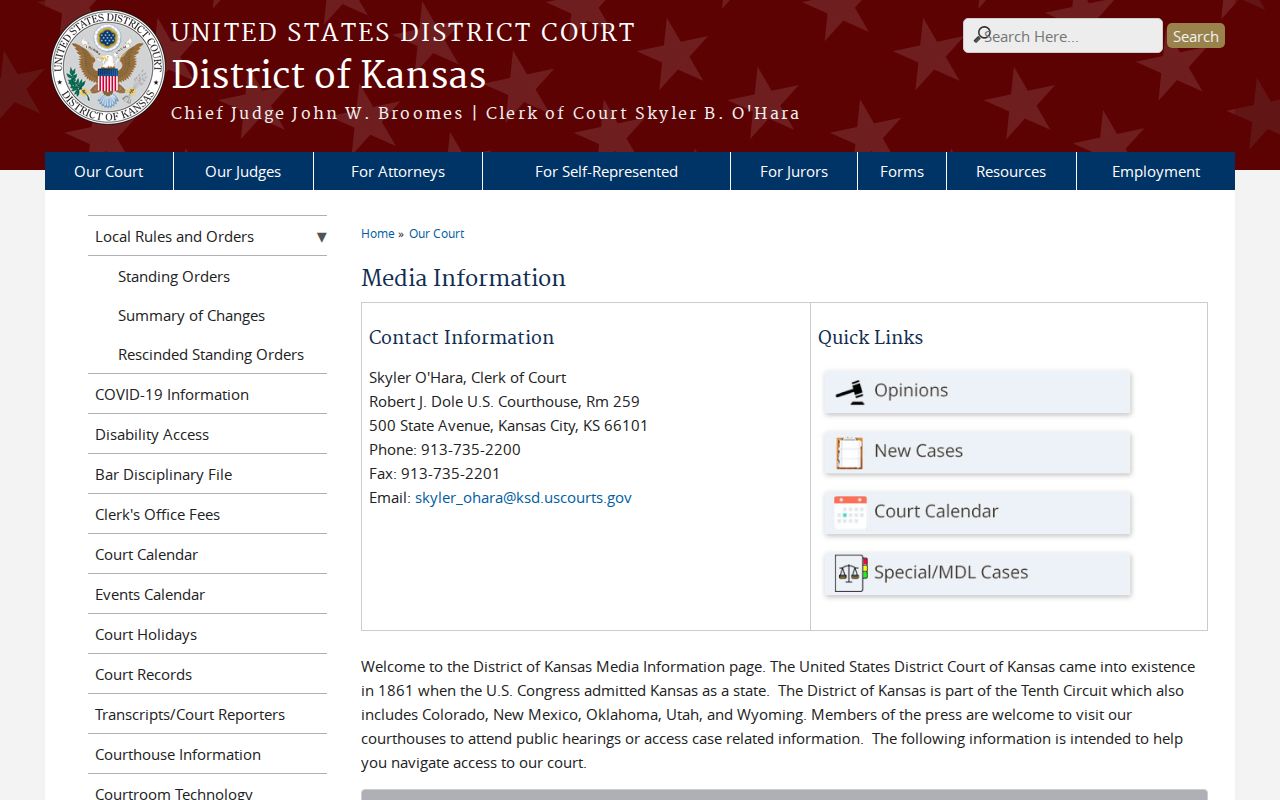
That federal screen belongs to a separate system. Keeping it apart keeps a state Haskell County docket search pointed at the right court.
Payment Tools Are Not Haskell Dockets
The Kansas Central Payment Center looks up payment accounts. It is no stand-in for the Haskell County criminal docket or its Events history.
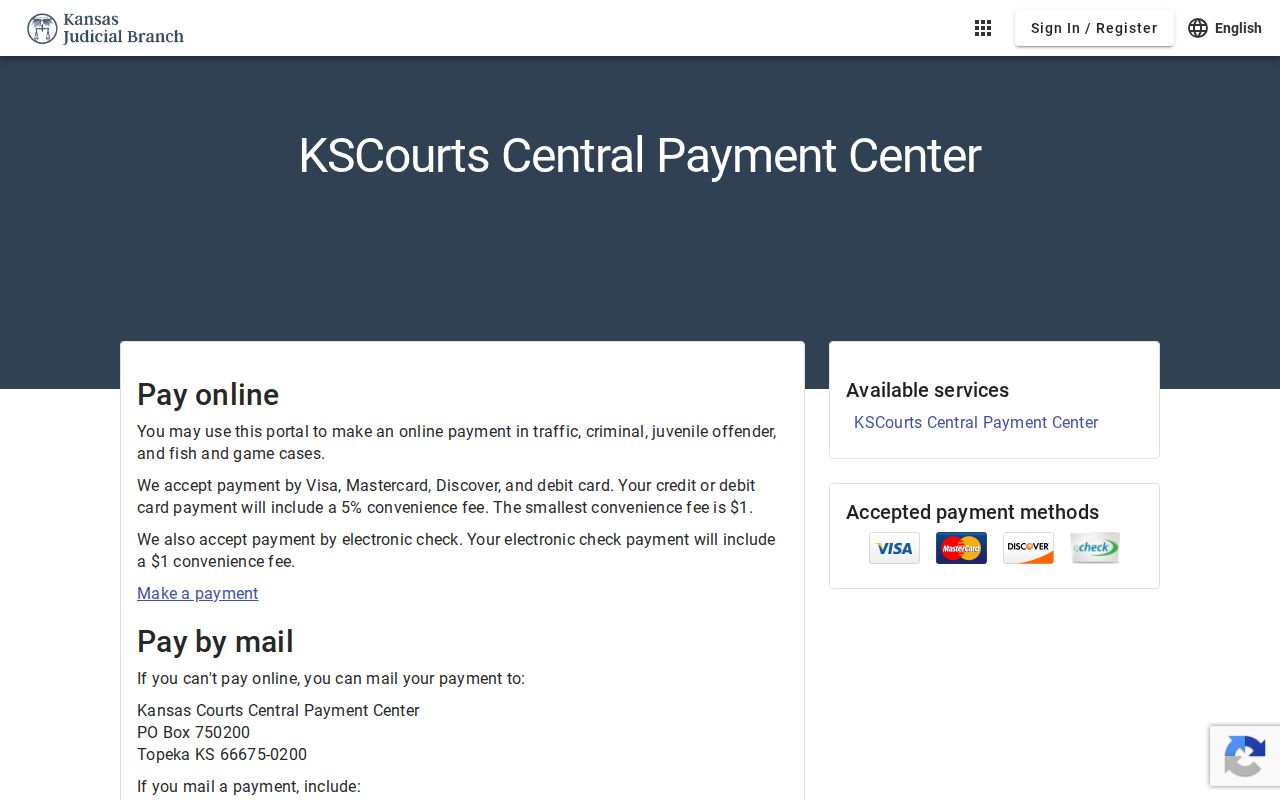
Turn to CaseSearch or the clerk for what the docket actually records. Pay only after the court and the obligation are confirmed.
Sublette links a PayGov municipal payment form for its city court.
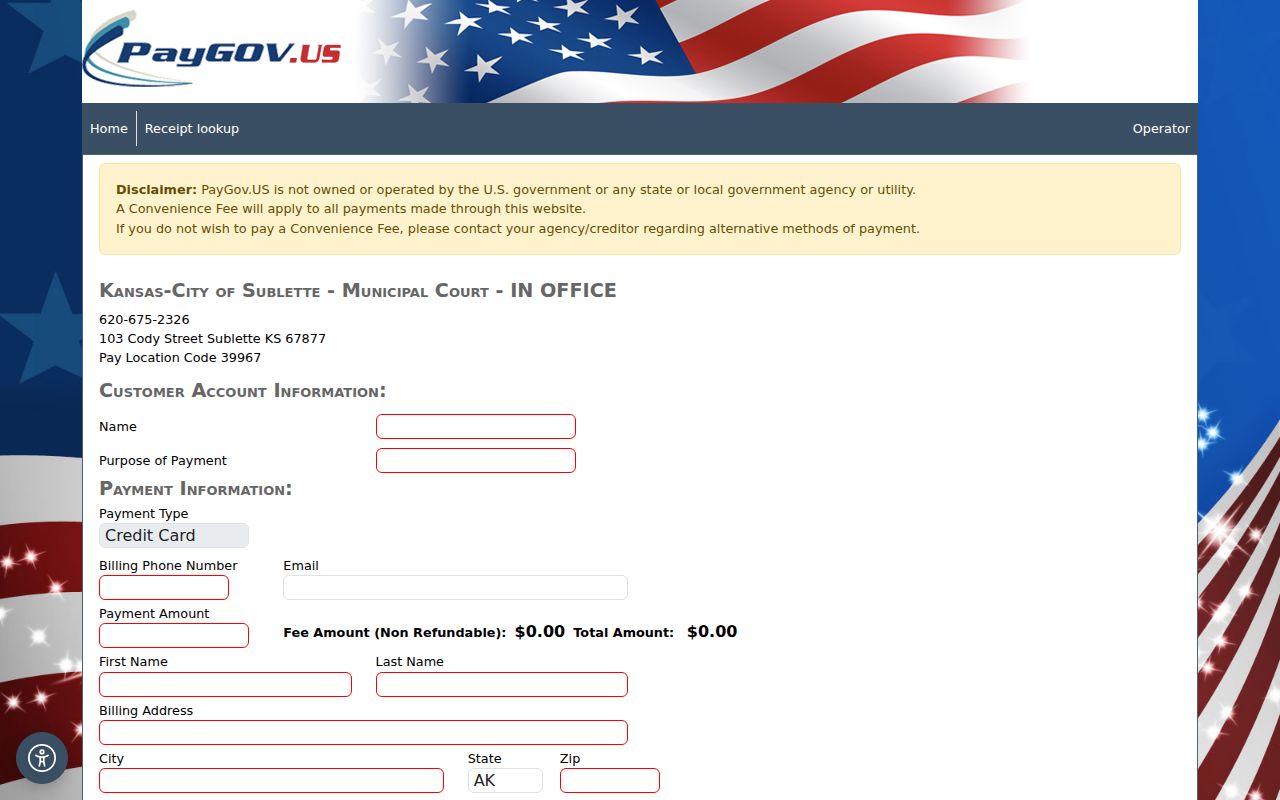
That form pays city fines. It is not a district criminal case viewer, and a city ticket should never be merged with a state case just because both started with a citation.
Sealed Dockets and Public Access
Kansas law sets some limits on public access to a Haskell County criminal docket. Court rules and orders in individual cases set others. A sealed case will not show up in the portal or at the public terminal. Even a visible docket can hold a restricted item. Expunged matters, juvenile cases, child-in-need-of-care records, certain investigation records, grand-jury material, and protected data sit behind a different access rule.
Key access rules:
Kansas Supreme Court Rule 22 governs public electronic district and appellate case-record access.
Kansas Supreme Court Rule 24 requires filers to redact protected identifiers.
K.S.A. 60-2617 provides sealing and unsealing standards.
K.S.A. 38-2309 sets juvenile-record access rules.
Is an item missing from the docket? Ask the clerk of the district court whether it is public, sealed, restricted, or just not available in electronic form. Request any releasable or redacted portion, but skip material that a law or court order keeps closed.
Haskell Filings Are Not Dispositions
The first entry in a Haskell County criminal docket answers one question. The final outcome answers another. A complaint or information records an accusation placed before the court. Later Events may show an amended charge, dismissal, diversion, plea, trial result, or another outcome. Read only the opening event. You can get a false picture of how the case actually went.
That same caution applies after an outcome is entered. A guilty plea category in an annual report will not tell you the sentence. It will not cover a particular Haskell County case. Sentencing, costs, probation review, restitution, or an appeal may all appear as later events. The sound method is to read the full public chronology and pinpoint the relevant order. Get a certified copy from the Haskell clerk when formal proof is required.
Aggregate FY2025 rows cannot answer a question about one case. The report counts outcomes across a single period. For what happened in one public Haskell County criminal docket, use Kansas CaseSearch Events. The clerk-held file is the other source.